Belgian Wings
Belgian Air Force, past and present.
The Aeronautical Reference Site - De Luchtvaart Referentie Site - Le site référence de l'Aéronautique
Ready 24/7: How we protect the Benelux airspace together
2026-05-27
Aviation Day
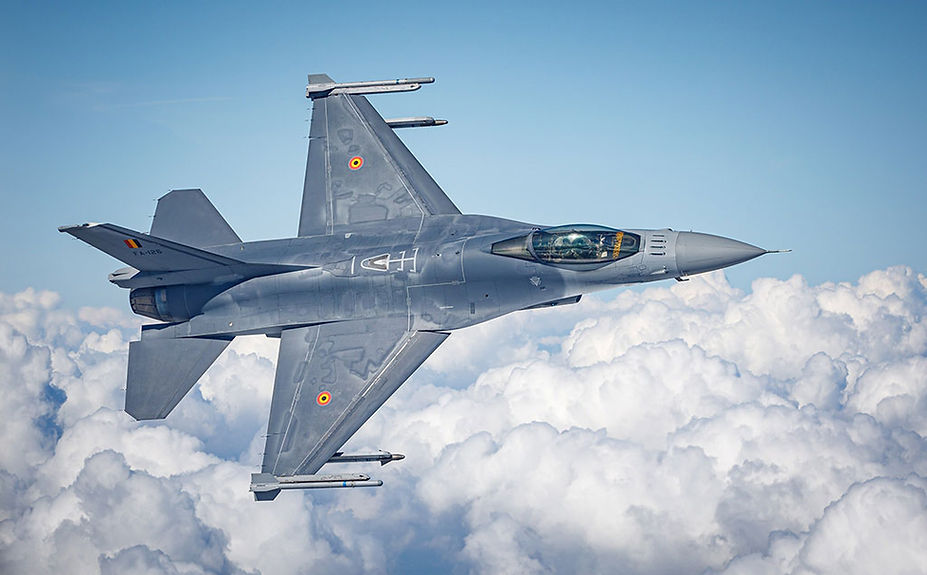
Belgian Air Force F-16AM with QRA duty.
Ready 24/7: How we protect the Benelux airspace together
Day and night, 365 days a year, the Belgian Air Component and the Royal Netherlands Air Force safeguard the airspace over Belgium, the Netherlands, and Luxembourg. This vital mission is carried out under the Benelux agreement, with the Quick Reaction Alert (QRA) duty permanently rotating between Belgium and the Netherlands.
Whether it is a foreign fighter jet or a commercial airliner that has lost radio contact, our pilots stand ready to intervene the moment an unknown or suspicious aircraft appears on the radar.
Current Status: Who is on watch now?
Who is responsible today? The Belgian Air Force is currently leading the mission and holds responsibility for the Quick Reaction Alert. Our mission-ready F-16s are on standby day and night, operating from the airbases in Kleine-Brogel and Florennes.
Who takes over? In mid-April, Belgium will hand over the baton. The Royal Netherlands Air Force will then take over the duty with their F-35 fighter aircraft. From that moment on, the Dutch aircraft will be on standby at the Volkel or Leeuwarden airbases.
Airspace surveillance is a core responsibility of every NATO ally. For the QRA mission, Belgium and the Netherlands alternately maintain two fighter jets on continuous standby. Our mission relies on two crucial pillars:
From the ground: Radar operators at our Control and Reporting Centre (CRC) in Beauvechain (Bevekom) and their Dutch counterparts in Nieuw Milligen continuously monitor the radar screens. They filter out friendly flights and instantly detect any aircraft that fails to identify itself or enters the airspace without a flight plan.
In the air: As soon as the alarm sounds, the QRA springs into action. The duty pilots and technicians are on standby next to their aircraft, which are already fully checked and pre-programmed. This allows the fighter jets to scramble and take off within 15 minutes.
Once airborne, the pilots are guided directly toward the target by air combat control. Our aviators intercept the unidentified aircraft at close range to visually assess the situation and determine its intentions. They establish contact with the crew via radio or internationally agreed hand gestures. In most cases, we safely escort the aircraft out of the airspace or guide it to a nearby airbase once compliance is restored.
Safeguarding national and NATO security is not a luxury. Each year, we record an average of the following in the Benelux airspace:
20 incidents (unidentified or non-responsive aircraft)
10 scrambles (where fighter jets actually launch on an urgent mission)
4 actual interceptions (where the aircraft is intercepted and inspected in flight)
As soon as the QRA aircraft have safely landed, technical crews immediately prepare them for the next potential call. In this way, we guarantee uninterrupted security above our heads. Swift, efficient, and unwavering.
Info and images: Belgians Defence, Belgain Air Force, Michael Moors, Dutch MOD (video BAF intercept 2018)
#QRA #QuickReactionAlert #Benelux #NATO #NAVO #AirDefense #BelgischeLuchtmacht #Defensie #F16 #KleineBrogel #Florennes #Bevekom #Luchtcomponent #Veiligheid #Paraat#Luchtverdediging #Scramble #Aviation #Military #Airforce #KoninklijkeLuchtmacht #F35 #Volkel #Leeuwarden #SamenSterk #AirCombatCommand
Source: Aviation Day